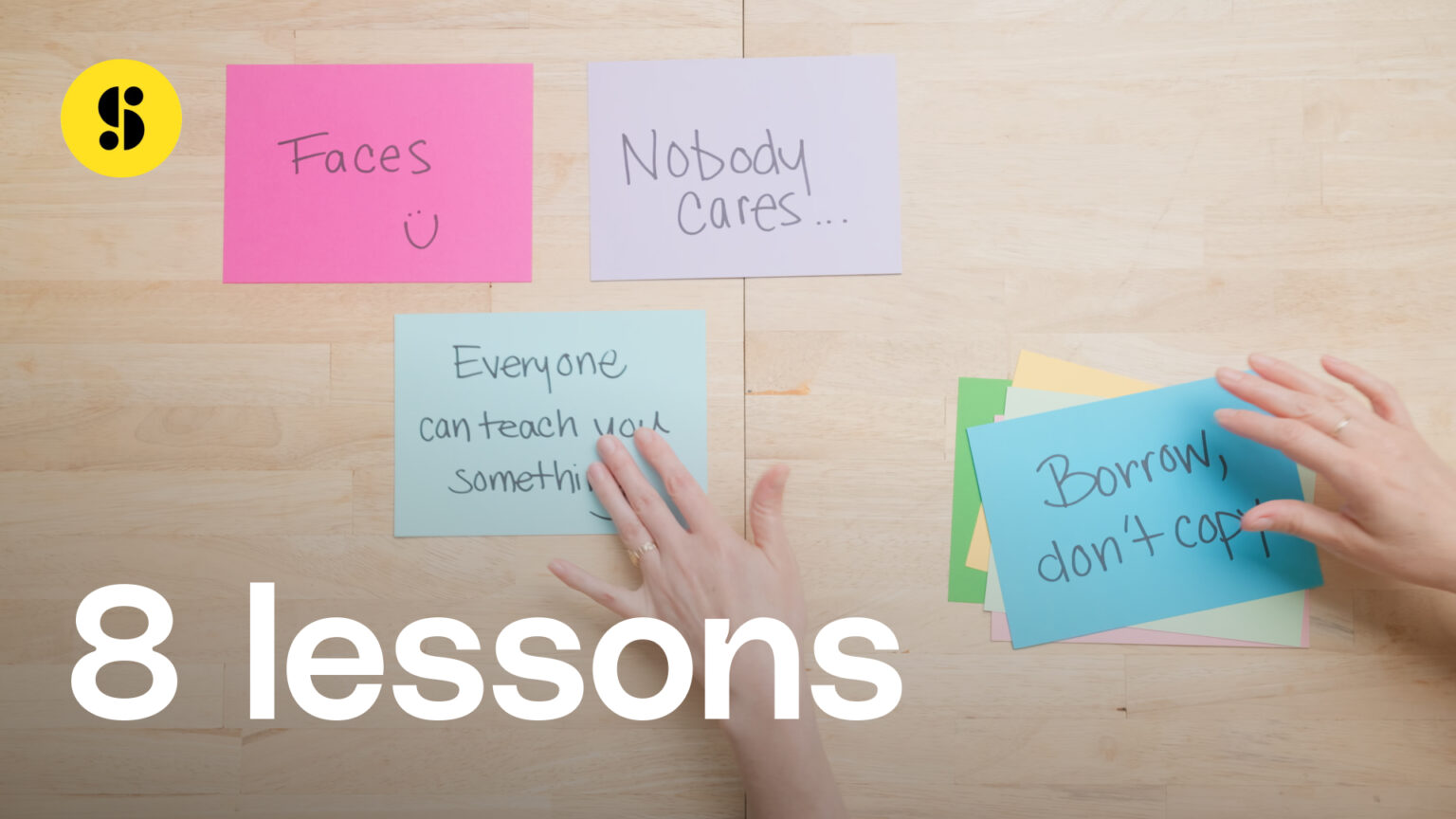
When you’ve been working in corporate video production doing in-house video marketing for over 8 years, there’s a lot of lessons you learn along the way. Some things you learn through trial and error, while others you learn through pure chance. But all of it adds up to help you become a better editor, marketer, and creative.
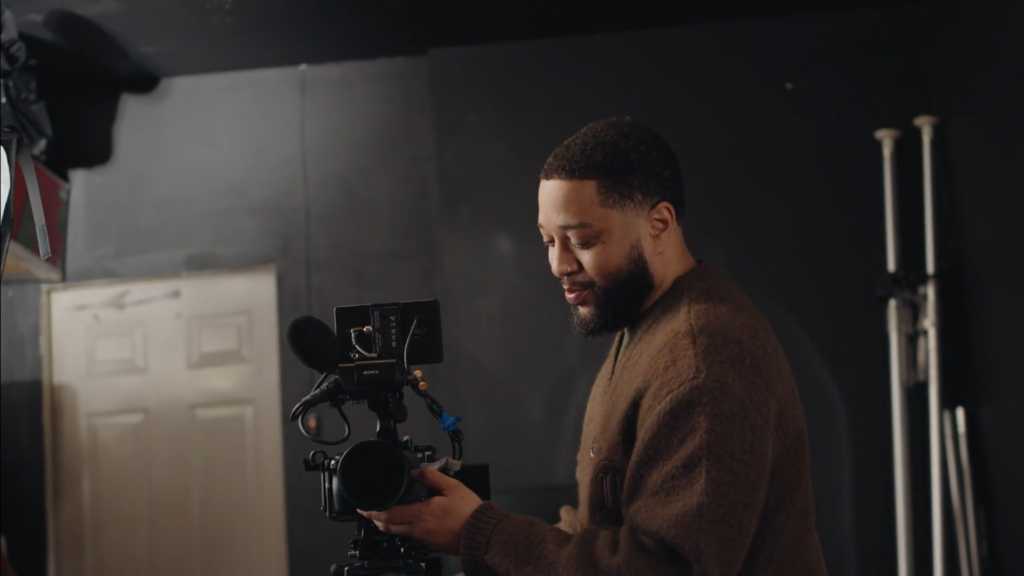
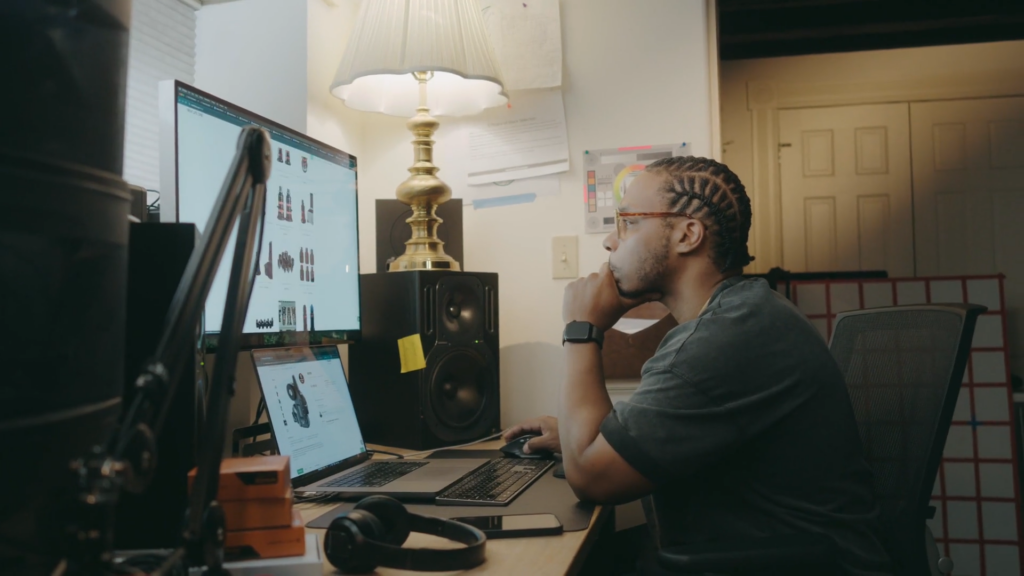
The Storyblocks video team sat down to talk through the 8 biggest creative lessons that they’ve learned in the last 8 years. From creative blocks to burnout, changing platforms, and more, keep reading to learn what Kaitlyn Rossi, our Creative Director, and Kyle Miller, our Manager of Video Production, have taken away from it all.
8 creative lessons learned from 8 years of corporate video production
Keep reading to learn about the 8 lessons our team has learned, or watch the full video below.
The mindset shifts
1. Nobody cares (unless it’s relevant to them)
Key point: Audiences only care about how your content, product, video, etc. helps them, not how awesome your brand is.
One of the hardest jobs of being a marketer is finding ways to make people care. And one of the earliest lessons that many marketers learn is that it doesn’t matter how cool you think your brand, product, service, etc. is – you need to make the right people care about it.
“Your audience doesn’t care what you have to say about yourself,” Rossi explains. “They want to know what all of this means to them. They want to be able to relate to it from their perspective.” When you’re creating a marketing video, a key question you need to ask yourself every step of the way is “Why should they (your audience) care?”
Because that’s the exact question they’ll be asking themselves when they watch it.
Just because you create an ad or a video doesn’t mean that anyone needs to watch it. As Miller puts it, “[Audiences] aren’t coming [to a platform] to watch your ad…unless it’s really, really appealing. And that means you have to give them something to care about.”
If you’re seeing a campaign, video, or other marketing efforts flop, you likely need to take a step back and do more research to really understand your audience. Read the comments. Read the feedback. Read the threads on Reddit where your brand is being mentioned, both positively and especially negatively.
That’s how you’ll learn to understand your audience, their perspective, and what they really care about. “[Your brand] is how people perceive it, not how you think of yourself,” says Rossi.
2. Everyone can teach you something
Key point: Non-creatives can often provide the most insightful feedback – don’t discount someone’s opinion just because they’re in a different department.
No matter how many years you’ve been a professional in a field, there’s always more to learn. And the people you can learn from can sometimes be the ones you least expect.
“I think you have something that you can learn from each and every person on your team,” says Rossi. “You shouldn’t discount the people you wouldn’t consider specialized in your field.” Just because someone’s never edited a video in their life doesn’t mean that they haven’t watched a million videos online and seen ads. They just have lived experience on the other end of the spectrum, which shouldn’t be discounted.
But a big part of being able to learn from non-creatives is knowing what questions to ask when you’re looking for feedback. “The way to ask for feedback is ‘How does this make you feel?’ or ‘What’s the message that you take away from this,’” Rossi explains. Asking questions about the bigger picture or the main thing you want your audience to get from your video can provide really valuable insights.
When you’re bringing in teammates for feedback like that, it’s important to bring them in early. Because if a message isn’t clear or they’re coming away with the wrong impression, that’s something you want to fix before putting hours of production work in.
3. Don’t lose your joy
Key point: Burning out as a creative professional is a real risk. Joy is your long-term fuel.
If you only take one lesson away from this article, this should be it. Because while the other lessons here matter, this is essential to creating successful video and seeing success in your career.
Even if you absolutely love video and consider your work your dream career, you can still get burnt out. And once that happens, all the parts you used to love about creating video can quickly become a struggle and that will show. “If you don’t breathe your enjoyment, your joy, your creativity into your video work, your audience will be able to tell,” says Rossi.
If you do find yourself in that situation, beyond taking some time off to recover and recharge, here are some more ideas for finding your joy again:
- Lean into experimentation. What small moments or changes can you make to switch things up a little?
- Ask yourself how you can make a process more fun. If you’re brainstorming ideas, try changing up your environment or doing a more collaborative approach.
“Creative work is hard. You’re creating something out of nothing,” Miller explains. “So finding a little bit of spontaneity, not having to make everything perfectly optimized, and switching things up is a good way to explore a different approach.”
Production principles
4. Done is better than perfect
Key point: Perfection will only stall progress, but momentum drives results.
As creatives, it’s rare to be 100% satisfied with something we’ve worked on. Many of us are perfectionists, but in most cases it hurts us more than it helps. “Another way to say this is ‘perfect is the enemy of progress.’ If you’re focusing too much on every little detail, you’ll get in your own way,” Rossi points out.
In the fast-paced world of video, learning to know when to leave well enough alone is an essential skill. Because the results of 5 “just okay” videos will give you way more helpful information than one “perfect” video. And even then, that video you spent forever perfecting may not even end up performing.
Both recall how there’ve been many times where they’ve spent a lot of time on a piece of creative to perfect it, only to launch it and see it get zero traction. So even though they spent a ton of time on it, no one ever sees it in the end.
As Miller puts it, “You’re going to get a better understanding of the creative by getting it out into the world… rather than making a lot of assumptions and overthinking your own decisions.” You’ll have plenty of time to make changes and tweak things later. Just focus on getting something published first, then you can focus on what’s working and what can be improved for the next round.
5. Quality is king… but
Key point: What’s considered “high quality” changes depending on the platform and purpose.
8 years ago, “quality is king” meant the quality of your production value. How much effort are you putting into setting up a shot? How realistic and impressive are the visual effects? While this can be important in some videos, it’s not true across the board.
Now, quality is king means the quality of your content overall – it’s not just about production value. “You can create a really brilliant idea…and it can be shot on an iPhone,” explains Rossi. Not having 4K quality video isn’t a death sentence for views. Video has been democratized, and a great video is judged on way more than how crisp and clear the visuals (and even audio) are.
Instead, focus on storytelling techniques, creating a solid narrative, knowing your audience, and understanding the platform your video is going on. Because what works well for a TikTok isn’t necessarily the same thing that will work for a Meta ad.
6. Faces win
Key point: Human faces draw people in – it’s biology, not just branding.
With our video marketing, we’ve found that faces are really valuable. “If we change nothing about [an ad] except for the intro shot, the one with the face typically performs better,” says Rossi. It’s not just us, either – a study showed that almost 92% of ads that featured a person’s face got more attention than ads without faces.
But it makes sense for Storyblocks – our library is full of stock media that help people tell stories. And ultimately, those stories are all created by humans, for other humans. We’re all trying to connect with one another, which is probably why the number one category for downloads on Storyblocks is also people footage.
Whether they’re being used for ads, storytelling, e-learning, or social media, faces help convey emotion that can really help drive a message or feeling home. “I think there’s a very human element of wanting to hear other people’s stories. People are drawn to other people,” Miller explains. “Centering your story around a specific person, maybe someone who’s used your product, might just be more impactful than just listing off the value propositions.”
Creative integrity
7. Borrow, don’t copy
Key point: Inspiration is everywhere – but just copying something without purpose will fall flat.
Being inspired by other people’s work is only human. But when it comes to marketing, straight-up copying another brand or someone else’s work is almost always a bad idea. That’s because “[Your work] needs to be authentic to you, and it needs to mean something to your audience,” says Rossi.
Brands all have different audiences, different voices, and different perceptions. That’s by design – otherwise they would have a really hard time differentiating themselves from their competitors. As Miller puts it, “Something may not work for your brand because there could be additional context that’s understood in the back of someone’s head.”
So instead of copying and pasting a concept, ask yourself what about it works for that brand, and how can you adapt it for yours? Maybe it’s the fun and un-serious language it uses that you think your audience would enjoy, or the cinematic videography that aligns with your brand’s aspirational visual design.
The authenticity of your brand is its advantage. So with any idea, you need to put that at the center.
8. The only constant is change
Key point: Platform trends, audience tastes, and even internal teams evolve constantly – so make sure you’re keeping up.
With marketing, keeping up with the latest information, news, and trends is a must. Because even if you’ve been selling the same product for over 50 years, the world, technology, cultural landscape, people, and more have all been evolving.
So the same message or same tactics from 50 years ago won’t work today. Because today, “People’s attention has never been pulled in more directions–your strategy should be ready to shift,” says Rossi.
That’s why embracing change is such an important lesson. It means your team needs to stay adaptable. And a big part of that is building systems that allow for flexibility, whether that’s leaving room in your creative process for testing, taking big risks, and allowing failure to happen.
As scary as failure might sound, it’s also where you can learn the most important lessons. Understanding why something didn’t work is equally as important as understanding why a successful video did work.
Keep learning, and keep creating
Whether you’re new to video marketing or a seasoned pro, there’s always more to learn. It’s safe to say in the last few years, it’s felt like being on a high-speed train, with all of the developments in generative video and fast-moving social media trends.
But no matter how fast trends move, Storyblocks is here to help you keep up and help you create better video, faster than ever. With a growing library of over 5 million high-quality stock media assets, time-saving tools, and a wide network of talented artists, we have everything you need to level up your video production and keep up with the competition. Explore our plan options and sign up today to get started.