Imagine being at a networking event, trying to show someone an example of your work. You’re fumbling through YouTube, trying to find that one music video you worked on. But when you finally get to the video, you need to watch a 30-second ad. Not ideal.
Unlike other industries, where a resume, CV or LinkedIn profile may be enough to show off your experience, when it comes to creative work like video, a visual history of your skill set is necessary. This is where a video portfolio comes into play.
Types of video portfolios
A video portfolio acts as a visual resume or CV, showcasing your skills, knowledge, and expertise in bringing a potential client’s idea to life. It serves as a central hub, allowing you to easily direct potential clients or employers to one location where they can see all of your work.

When it comes to video, portfolios can generally be categorized into two distinct types:
- Showreels – A montage of your work compiled into a short sizzle reel.
- Dedicated portfolio pages – Typically hosted on a website featuring individual video projects.
Let’s take a look at which option might work best for you.
Showreels
Think of showreels as trailers of your best work, giving potential clients or employers a quick taste of what you can do. Usually, they’re 1–2 minutes long and focus on snappy edits, beautiful cinematography, or motion design work that could rival high-end commercial productions.
You don’t want any fluff in your showreel. The goal is to make a statement: this is who you are and what you can do. Your showreel should also have rhythm and the right music to keep the viewer engaged from start to finish.
Rather than a generalized collection of clips, a niche-focused showreel holds far more value than something overly broad. Now, let’s dive into a few examples.
Examples of great showreels
In this showreel from Cub Studio, we can see that it showcases a distinctive animation style, which is primarily centered around sports (but not exclusively). With cartoonish, expressive motion, a playful color palette, and vibrant, kinetic energy, potential clients can quickly determine whether this studio fits their project.
That clarity is crucial. While you want your showreel to captivate the right people, you also want it to reflect your identity to make it easy for potential clients to see if your approach aligns with their vision. As cliché as it sounds, time is money for a reason. Spending weeks in discussions with a potential client, only to realize you’re not the right creative for the job, is a costly waste of time for both parties.
This showreel from the studio TwistedPoly, while still an animation-based studio, has a completely different style than the last one. So while a showreel should be a snapshot of your best work, it should also represent your core artistic vision and unique style.
When it’s relevant, you should also include statistics and numbers to paint a picture of your work. For example, I worked as a video producer and content host for a channel focused on filmmaking. This showreel highlights my work, the stylistic approach I implemented, and its impact on audience engagement.
Who should use a showreel?
Showreels are great for beginners or new filmmakers/editors who don’t have a big portfolio. If you’ve only worked on a few projects, cutting together 60 seconds of standout material is much easier than building a portfolio page. In that case, a website may work against you by making you look inexperienced.
Downsides of showreels
While showreels are versatile tools for showcasing your talents, their approach can also be quite limited. After all, you’re aiming for about one to two and a half minutes in length. Even then, two and a half minutes likely push it into too-long territory in this digital age of fast-paced media.
As a result, depending on the type of filmmaker or video editor you are, you might find that time limit tough to show off your skills. If you’re a patient cinematographer who takes pride in long, detailed nature shots, condensing that into just a few seconds won’t necessarily showcase what you do. That’s often the issue with showreels: while they capture the highlights of your work, sometimes those highlights aren’t as impactful without the full buildup from the original video.
This is especially true for directors. Summarizing a body of work in just a few minutes of montage snapshots doesn’t fully convey their style or storytelling ability. If your showreel is restricting your potential, then a dedicated portfolio website or page will serve you far better.
Personal website
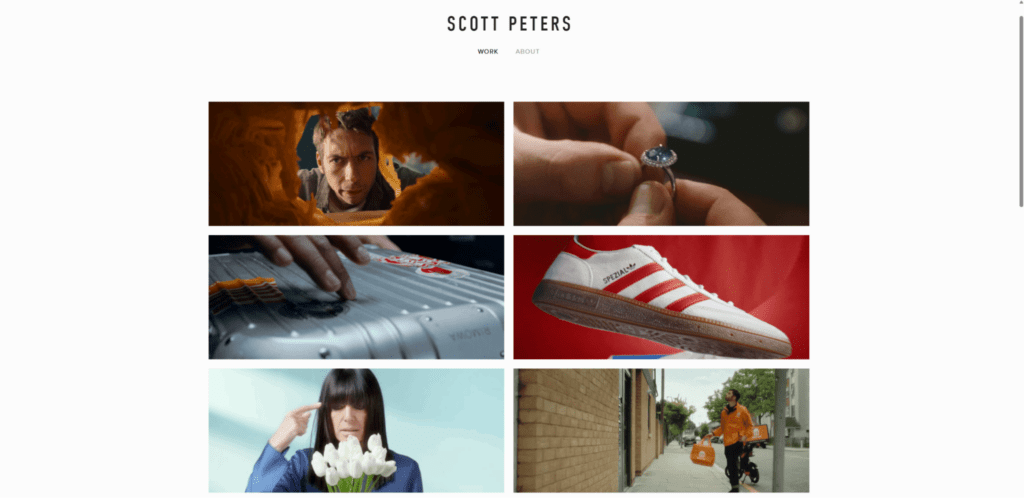
With a personal website, you can provide a URL and potential clients or employers can visit to see your curated portfolio in full. Unlike a showreel, a website lets you give a potential client direct insight into your work and let them watch your videos in full. You can also show off a lot more of your work in one spot.
Rachel Kisela, a freelance video editor for social media, is personally all for creating a website over a showreel. “Once you have some work, go ahead and make a website. Many people will make a reel and put it on Google Drive or make a YouTube video or whatever. But I think that having a website that is yourname.com is worth the money it costs. It immediately bumps up your credibility,” she explains.
You don’t need to be a professional web developer or have any website building experience at all to create a great personal website. Services like Wix and Squarespace offer a wide range of pre-built templates that are easy to use, and some are even specifically designed to showcase video and photo work. Most templates are highly customizable, so you can make your portfolio look unique. For recommendations, check out this list of the 15 best Squarespace templates for videographers.
Keep a simple design
While setting up a website may seem exciting, it shouldn’t be too complex. You want to keep it simple. The website should land straight on a landing page featuring your video portfolio and a link to a contact page—nothing more.
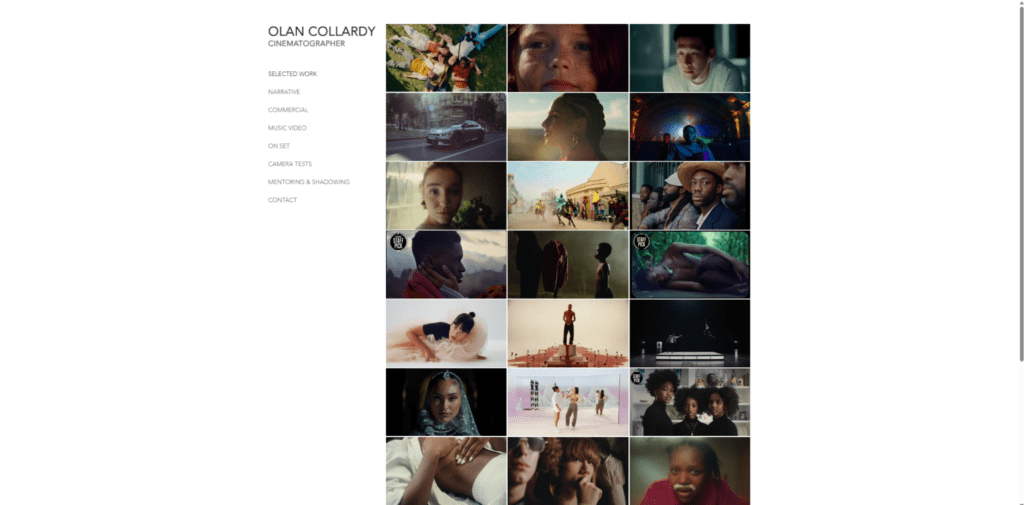
I don’t recommend burying your portfolio under blog posts or making users navigate multiple menus. You want to think of your video portfolio as an interactive business card. Clients can look at it and decide what they want to watch right away, instead of having to figure out where your work is.
If necessary, you can add a filter option to break down the different types of categories of videos so clients or employers can easily find what’s relevant to their project or work. Or create subpages for each project to provide additional details, if you work in video marketing where showing data and context is more important for a portfolio.
Costs of a personal website
The downside is that there’s much more legwork and incurred costs than hosting a showreel on YouTube or Vimeo. Using platforms like Squarespace to host your portfolio comes with monthly or annual subscription fees.
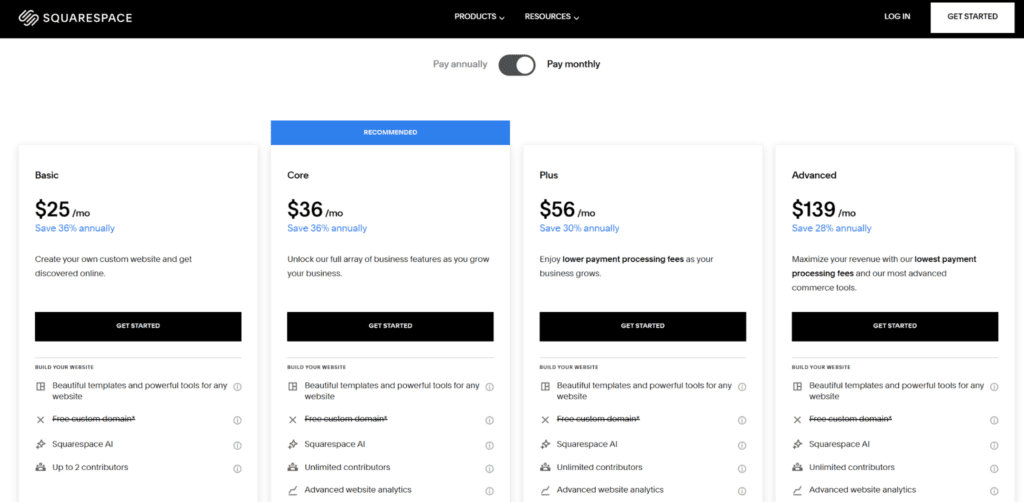
For a basic video portfolio, you probably wouldn’t need to go beyond the basic plan, but even that costs $25 a month. You’ll also need to invest in a domain name, which can be costly depending on its popularity. For example, if your name is John Smith, the chances of securing johnsmith.com are slim (sorry, John Smiths).
Instead, consider alternatives like:
- johnsmithvideo.com
- johnsmith.video
- johnsmith.tv
A domain that indicates you’re in video production can affect how potential clients perceive your site. Domain names can start relatively inexpensive, typically from $15 to $50, depending on the name and the service provider. However, domain pricing works somewhat like the stock market; if your name happens to match that of a famous person or a popular entity, the cost may rise significantly.
Remember that the first-year price is often much lower than the renewal cost. Be prepared for a potentially steep price increase in the following years.
Where to host your videos
Unless you’re coding your website and hosting it on a private server, you likely won’t upload videos directly to your file database. Instead, you’ll need to rely on one of the many hosting providers available on the market.
Thankfully in 2025, the choices for hosting platforms, whether for your video portfolio or a single showreel, are far more extensive than just ten years ago.
YouTube
YouTube is a great space for hosting your video work and enhancing discoverability. You might use YouTube simply to host your showreel or work, but there’s always the possibility that the algorithm gods may favor you, potentially leading to further work beyond your website traffic. If you already have an established following with your YouTube channel, it can help increase video views, further fueling engagement with your showreel.
However, YouTube is a commercial platform owned by Google, where ad revenue is key. If a potential client visits your website and has to browse through multiple videos, only to be met with a non-skippable 20- to 30-second ad each time, you’ll likely see those inquiry emails dwindle. In these instances, Vimeo may be the more suitable option.
Vimeo
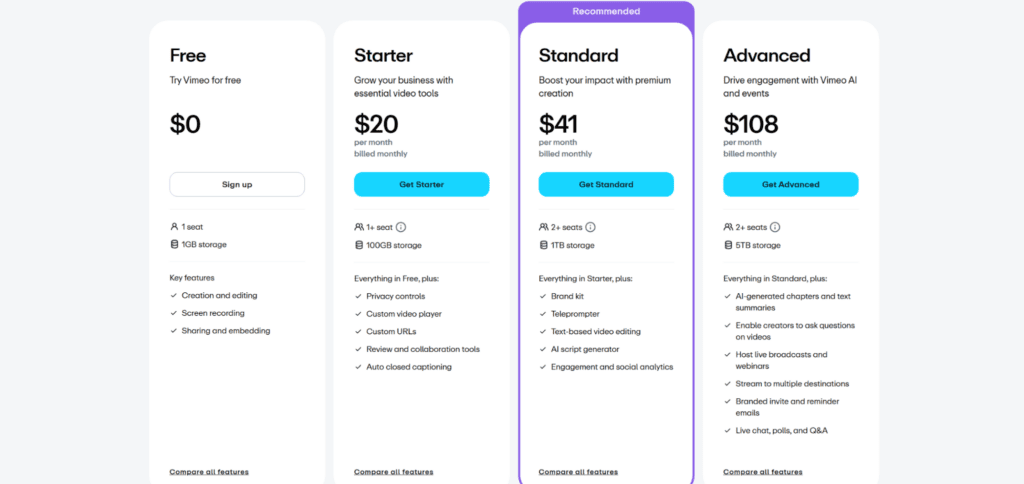
Vimeo allows you to upload videos at very high resolutions, and its compression algorithms do not break down as noticeably as YouTube’s. This means that scenes shot in near darkness or filled with gradient colors will retain their richness instead of suffering from banding. Which can be crucial if you’re trying to showcase the quality of your work. More importantly, Vimeo allows you to embed videos on your website without displaying its player controls depending on your subscription.
Again, this comes at a premium. Creating a personal website for your video portfolio can add up quickly between website hosting, URL acquisition, and now the video platform.
When you use a third-party platform to host your videos, you are subject to their policies and potential changes over time. After all, TikTok was removed from users in the U.S. for a short period of time. So in that time period, anyone whose work was on TikTok in the U.S. would have lost access to it. And it’s not impossible that it could happen to other platforms in the future.
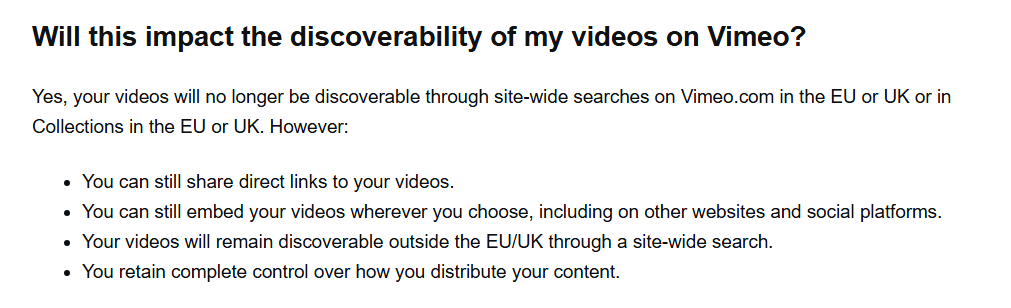
While Vimeo allows ad-free hosting and branding-free embeds, it is also one of the platforms that has undergone significant changes over the years. If you are a user in the UK or EU, you can no longer search for videos on Vimeo, nor can your videos be discovered on the platform itself. While this is fine if you only use Vimeo as a hosting solution, if you rely on the platform for additional exposure, that avenue has been completely cut off.
Picking the solution that’s right for you
Okay, that covers the main things you need to consider when it comes to creating a video portfolio. Here are the key points to give you a refresher on the primary points we’ve discussed.
Showreels
- Keep your showreel between 1–2 minutes.
- Focus on snappy edits to make an impact.
- Ensure the showreel reflects your artistic identity and unique style.
- Avoid fluff and only include your strongest work.
- If you’re a beginner, a showreel is a great option for effectively showcasing a small number of projects.
Personal Website
- A personal website allows you to provide a single URL for potential clients/employers.
- Unlike a showreel, a website lets viewers watch your full videos instead of just short highlights.
- If your work involves long-form storytelling or cinematography, a website is the best way to showcase your skills.
- Keep it simple. Your landing page should feature your portfolio and a clear contact link without unnecessary clutter.
- Consider website costs, including subscription fees, video hosting plans, and domain name expenses.
- Choose a domain that reflects your skill, like yourname.video or yournameedits.com
Hosting Your Videos
YouTube
- Great for hosting showreels and increasing discoverability.
- However, ads on YouTube can disrupt the viewing experience, potentially driving away potential clients.
Vimeo
- Allows high-resolution uploads with better compression than YouTube, and no ads!
- Some Vimeo plans allow branding-free embeds on your website.
- Be mindful of costs, as Vimeo plans can add up alongside website expenses.
- Be aware that Vimeo’s discoverability in the UK/EU has been restricted, meaning your videos won’t be searchable on the platform.
Final thoughts
Of all the challenges a filmmaker may face, setting up a video portfolio or showreel is one of the easier obstacles to overcome. If you can make everyone else’s ideas look great, you can do the same for your own. Once you have it set up, you can start finding clients or potential employers – check out our recommendations on the top websites for video editing jobs.
If you’re in a time crunch and need to assemble a showreel quickly, the Storyblocks library offers video templates to help streamline the editing process. On top of that, you can get unlimited downloads of over 5 million royalty free, high-quality stock assets to use in all of your projects. With our Pro plan, you’ll also get access to the Storyblocks plugin, which brings our library right into Premiere Pro and After Effects to help you work faster. Explore our library and sign up today to start downloading!