YouTube removed its trending page in July 2025. After more than a decade, the platform ditched the one-size-fits-all approach and went all-in on AI-powered personalization. Now, every user sees different recommendations based on their viewing history and preferences.
In this guide, you’ll learn how YouTube’s new personalized system works and find practical strategies to get your content in front of the right viewers.
How does the YouTube algorithm work in 2025?
YouTube has changed how its algorithm reads your content. It doesn’t just look at your title and description anymore. The platform now scans your video transcripts, analyzes thumbnails, and identifies on-screen hooks. It feeds all of this data into a system that connects your videos with viewers who are most likely to watch them.
The key shift is personalization. YouTube has moved away from showing the same videos to everyone. Instead, it customized your home feed, suggested videos, and search results based on your viewing habits and what you’ve engaged with recently.
Where YouTube’s algorithm acts
Your content appears in four main places, each with different ranking factors:
- Your Home feed shows videos from subscribed channels, similar content, and videos that perform well among users with similar viewing patterns. To populate this feed, YouTube also factors in content freshness and your recent platform activity.
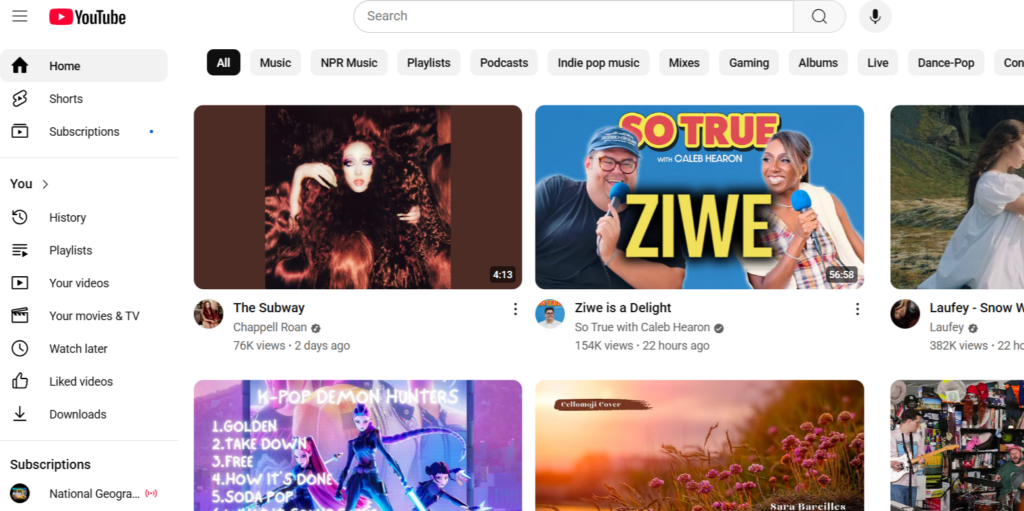
- Suggested videos appear next to the current video someone is watching. YouTube analyzes what other viewers watched after that video (and your channel’s relationship to the current video) to make recommendations. Quick filters like “More from this channel” and “Related topics” create new discovery paths.
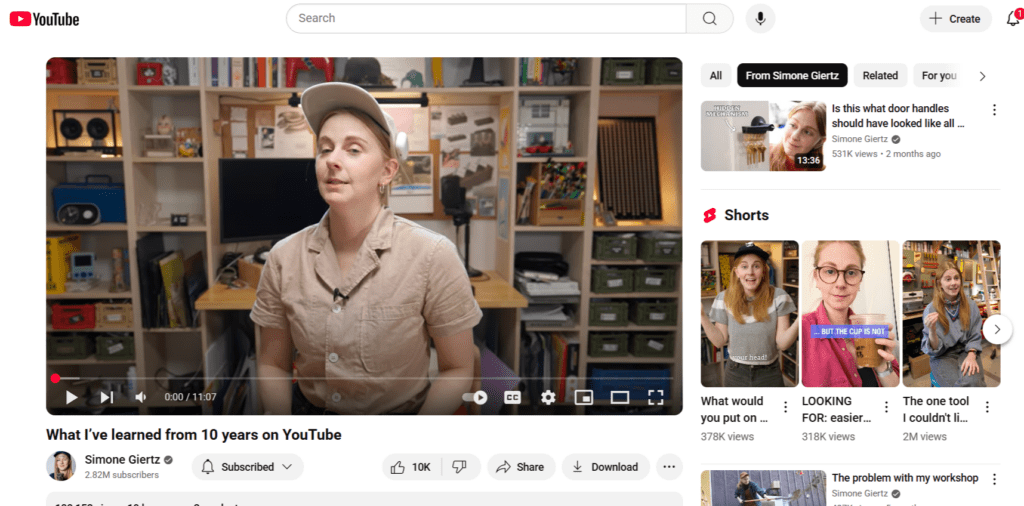
- Search results rank videos based on how well your metadata matches search queries. YouTube weighs your previous videos for similar searches as well as your channel’s topic authority and trustworthiness (how much of an “expert” YouTube sees you as).
- Your Shorts feed is like Instagram reels, where users swipe through content. Here, YouTube prioritizes engagement, rewatchability, and how many viewers keep watching instead of swiping away.
So, what can you do to make sure viewers see your content?
What makes videos rank higher
YouTube tracks specific signals that determine which videos deserve wider spread. Here’s what it focuses on:
- High click-through rates (CTR): Your CTR measures how often people click your video when they see it in their feed. A strong CTR tells YouTube your titles and thumbnails are compelling, making it more likely they’ll show it to viewers with similar interests and profiles.
- Watch time > view counts: YouTube prioritizes videos that keep people on the platform longer. Your average view duration and total watch time directly impact how widely YouTube distributes your content more than total views.
- Engagement signals that your content is high-quality: Likes, comments, shares, and saves tell YouTube that viewers value your content. Comments carry extra weight because they show active investment in your videos.
- Viewer satisfaction: YouTube monitors negative signals, too. When viewers click “Not interested” or “Don’t recommend channel” after watching your videos, YouTube will limit your reach to similar audiences.
All of these point to a major shift in how YouTube’s algorithm works. As YouTube employee Rene Ritchie explains, “the algorithm pulls videos for viewers” rather than pushing content for creators. This means focusing on a few metrics or search engine optimization (SEO) hacks no longer cuts it. You need a holistic understanding of how viewers interact with your content.
YouTube algorithm explained: What’s most important in 2025?
YouTube’s core focus is to keep viewers on the platform, watching content for as long as possible. Three key things show how YouTube’s algorithm changed in 2025 to be more user-centric (and what you should focus on to encourage it to highlight your content).
1. AI analyzes your entire video
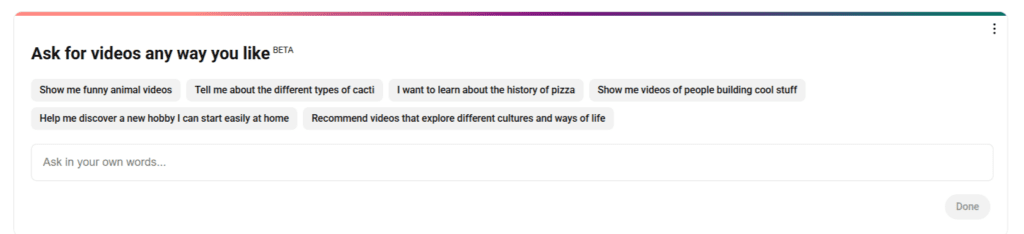
YouTube’s generative AI analyzes everything in your videos. It reads your audio transcripts, text overlays, and visual elements frame by frame. It also looks at your tone of voice to piece together your overall sentiment.
For example, if you mention a product name once in a 20-minute video, YouTube will categorize that video under that topic. The algorithm might match your content with viewers interested in specific concepts, even when those concepts never appear in your metadata.
In other words, titles and descriptions still matter, but AI only uses them as starting points. Every single part of your video is being analyzed to determine the topic, audience, and quality. This helps YouTube recommend the right content to the right viewers, however they may search for them,
2. Satisfaction beats vanity metrics
Views no longer tell the whole story. Actions like saves and shares prove genuine engagement, so YouTube prioritizes these when ranking your content.
YouTube runs satisfaction surveys that ask viewers how they felt about specific videos. This feedback influences which videos the platform recommends. Videos with fewer views but higher satisfaction scores outrank content that generates clicks but leaves viewers unsatisfied. So relying on clickbait titles or thumbnails won’t work very well in the long run.
Aprilynne Alter, a YouTuber and strategist, emphasizes following what she calls the “80% rule” when it comes to creating videos. “Every time you come up with a new video idea, ask yourself: will 80% of the audience of my previous video be interested in this video? When you follow the 80% Rule, you make it easier for the success of one video to transfer over to the next, allowing your channel to build momentum and grow,” she explains.
Aprilynne has a ton of great videos on improving your YouTube videos and building a solid strategy for your channel that are worth checking out, like the one below.
3. Freshness and niches fill the trending gap
YouTube now relies on category-specific charts and Explore tabs to find emerging topics and niche content. This creates more opportunities for creators in specialized areas to gain visibility.
Fresh content performs better in recommendations because YouTube uses it to test audience interest in new topics and creators. The platform actively experiments with newer videos to help grow their channel faster.
Niche creators benefit most from this change. Instead of competing against mainstream content for trending spots, your videos surface directly to viewers with specific interests.
Algorithm behavior: Long form vs Shorts
YouTube treats long-form videos and Shorts as completely different content types. Each format runs on separate algorithms with distinct ranking factors and viewer behaviors.
Long-form videos
Unlike Shorts, viewers deliberately choose long-form content. They scan thumbnails and titles, then decide whether to click and commit time to watching. Because this behavior is intentional, it gives you as a creator more control over how people discover your videos.
Many people assume that to get views, every video has to be short. But that’s a myth, as creator and social media consultant Jade Beason points out: “Long-form content is becoming more popular again, especially on YouTube, where people are watching it on TV screens instead of their phones.”
You can strategically increase this engagement. Use call-to-action prompts, organize content into playlists, and build watch-next loops to feed YouTube’s suggested video algorithm. When viewers move from one of your videos to another, they’ll recognize high-quality content and recommend it to others.
The secret to success isn’t just about video length. As Jade explains, “It depends on the platform and the purpose of your content. The algorithms prioritize retention, not just length. People will stay for a 20-minute video if it’s good. What matters is pacing, storytelling, and delivering value throughout the video.”
But even then, making your video stand out is hard. As Aprilynne puts it, “In a world where there’s more content than ever before, videos have become commoditized. Pick a video on a given topic, and it’s usually easily interchangeable with dozens of other videos on that topic. So to stand out and convince viewers that your video is worth watching, it’s helpful to signal your USP, or Unique Service Proposition, in your video’s packaging (title & thumbnail).”
“A “Unique Service Proposition” is just a fancy term for the thing that makes your video special, the reason why someone would watch your video instead of all the others like it. For big, well-established YouTubers, their USP is their familiarity. But other powerful ways to establish a USP include expertise (your domain experience), effort (how much work you put into the video), personality (your unique tone, opinion, or style), and proof (real evidence that you actually did the thing you said you would),” she explains.
The algorithm rewards you for building viewing sessions rather than just individual video performance. YouTube tracks how your content keeps viewers on the platform and uses this data to boost your videos in recommendations.
YouTube Shorts
Viewers swipe through Shorts in a discovery feed. They don’t choose which Shorts to watch, they just consume whatever YouTube serves next. This changes the decision process. Channels they subscribe to will still populate their Shorts feed, but the majority of the content will be pulled based on what YouTube thinks they’ll be interested in. And if they don’t like a video, they’ll simply swipe past.
The Shorts algorithm focuses on immediate engagement. Retention rates (known as “VVSA” or “viewed versus swiped away”), loops, replays, and what viewers do within the first few seconds are what determine whether your Shorts reach wider audiences.
Note: Since March 31, 2025, YouTube counts views on your Shorts as soon as the video starts or replays, matching TikTok-style metrics. However, YouTube still tracks “engaged views” separately for Partner Program eligibility and monetization requirements.
According to YouTube strategist Paddy Galloway, you generate higher view counts and retention rates when you create Shorts between 50 and 60 seconds. Try to target 70–90% average view duration for maximum support from the algorithm.
Will Shorts impact the visibility of your long-form videos?
YouTube runs separate algorithms for your Shorts and long-form videos. Poor-performing Shorts won’t damage your channel’s long-form performance because YouTube evaluates each video type independently.
This separation works at the video level, not the channel level. Your Shorts can fail without hurting your regular uploads, but successful Shorts won’t automatically boost your long-form content. Each piece of content you create competes within its own algorithm system.
Strategy tips for long-form vs shorts
Here’s how to optimize each format for better performance in 2025:
| Long-form videos | YouTube Shorts | |
| Format | Use a horizontal format for desktop viewing. | Vertical format (9:16 aspect ratio). |
| Length | Up to 12 hours for verified accounts, and 5 minutes for unverified. The ideal length varies, but 8–15 minutes performs best for engagement and YouTube monetization. | Up to 60 seconds. The perfect video length is around 50–60 seconds. |
| Hook strategy | Use strong hooks in the first 15 seconds to prevent drop-off. Start with a surprising statistic, a big takeaway, or a dramatic moment that happens later. | Hook viewers within the first 1–3 seconds. Start with a bang like “The biggest mistake YouTubers make is…” rather than “Hi everyone, today I’m going to talk about…” |
| State the value viewers will get from your video early and clearly. You can also use on-screen text to reinforce the key benefit of watching. | Lead with immediate visual impact or an intriguing question. Show viewers that they’ll learn something useful or start with an interesting list that they’ll discover in the short. | |
| Content structure | Use chapters and timestamps for longer videos. It helps viewers navigate your content and shows YouTube what your video is about. | Design content for loops and rewatch triggers. Looping shorts (where viewers rewatch the video) tend to get more recommendations than those with lower replays. |
| Create different series and “watch-next” loops to boost session duration. | Structure your Shorts for easy replay. End with a question that the beginning answers, or create before/after reveals that make viewers want to see it again. | |
| Build playlists to guide the viewer’s journey. | Focus on single concepts or quick entertainment. Shorts work best when they deliver a quick message or a funny moment. | |
| SEO tactics | The video title and description should be clear and keyword-rich. Use titles like “How to Fix iPhone Battery Drain in 5 Minutes” rather than “Phone Tips”. | Use keyword tools and YouTube’s Studio Research tab to identify search terms for hashtags and metadata. |
| Optimize thumbnails with consistent branding. Upload transcripts for AI content analysis. | Use 3–8 strategic hashtags in the description for categorization. These appear above the title, making them highly visible. | |
| Metrics to focus on | Prioritize watch time, click-through rate, and post-view satisfaction. | Focus on immediate engagement through likes, shares, comments. |
| Drive engagement | Encourage saves, shares, and meaningful comments. Ask questions to drive comment engagement. | Create content that triggers instant reactions. Use pinned comments to drive traffic to videos or playlists, creating a bridge between your two content strategies. |
| Publishing strategy | Upload 2–3 times per week consistently. Maintain a regular schedule to meet subscriber expectations. | The first 48–72 hours determine how your video will spread. Test posting times to find your audience’s peak activity times, which you can find in YouTube Analytics. |
| Update older videos with new thumbnails and descriptions. This can give new life to evergreen content and improve its performance. | Post multiple Shorts weekly to test what resonates with your audience. The lower production time of Shorts makes them a great tool for experimenting with new ideas. |
YouTube’s Creator Academy emphasizes that the platform prioritizes channels demonstrating “expertise, authoritativeness, and trustworthiness on a given topic.” Building your channel’s authority goes beyond video performance. You need to establish yourself as a reliable source in your niche.
Focus on creating content in your area of expertise and build depth in your subject matter. Answer common questions, debunk myths, and provide tutorials that showcase your knowledge.
Your channel’s authority will increase over time. Each well-researched video adds to YouTube’s understanding of your expertise, making it more likely to recommend your future content to viewers searching for information in that area.
What to focus on in 2025
While it’s important to know how it works, don’t focus on trying to beat YouTube’s algorithm. Instead, get to know your audience and create content they actually want to watch.
Test everything. Try both Shorts and long-form videos, then double down on what works. Pay attention to your retention metrics because they tell you what keeps them hooked.
The algorithm will keep evolving throughout 2025 and beyond, so stay flexible. The creators who succeed will be those who adapt quickly based on their performance data rather than chasing the latest hack or trend.
Building a successful YouTube channel requires consistent, high-quality content. A Storyblocks subscription helps you create better videos with unlimited access to professional footage, music, templates, and more. When you make your content polished and engaging, your audience (and the algorithm) will notice.